

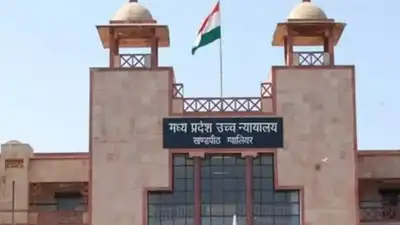
HEAD NOTE:– In Criminal revision no.-1937-2024 (Jaina Katlana v. State of MP & Anr.), the High Court of Madhya Pradesh upheld the discharge of the husband under Section 377 IPC (unnatural sex), relying on the amended definition of rape under Section 375 IPC (excluding marital rape) and precedents like Navtej Singh Johar v. UoI (AIR 2018 SC 4321) and Manish Sahu v. State of MP (2024 SCC Online MP 32939, paras 16–21). The court held that non-consensual unnatural intercourse within marriage is not criminalized under IPC, dismissing the wife’s revision petition.
Facts
The petitioner-wife alleged that her husband subjected her to cruelty, dowry demands, and non-consensual unnatural intercourse during their eight-year marriage. An FIR was registered under Sections 498A (dowry cruelty), 377 (unnatural offences), and other provisions of the IPC and Dowry Prohibition Act. The Sessions Court discharged the husband under Section 377 IPC, prompting the wife to file a revision petition before the High Court.
Arguments
The petitioner contended that the Sessions Court erred in discharging the husband despite evidence supporting the allegations. She relied on P. Vijayan v. State of Kerala (AIR 2010 SC 663) to argue that the discharge order was legally unsustainable.
The respondent-husband, supported by the State, argued that Section 377 IPC does not apply to marital relations, citing the amended definition of rape under Section 375 IPC (which excludes marital rape for wives above 15 years). He relied on Navtej Singh Johar v. UoI (AIR 2018 SC 4321), which decriminalized consensual same-sex relations under Section 377, and Manish Sahu v. State of MP (2024 SCC Online MP 32939), where the court held that non-consensual unnatural intercourse within marriage is not an offence under IPC.
Court’s Reasoning
The High Court dismissed the revision petition, aligning with precedents that exclude marital rape from the ambit of Section 377 IPC. It emphasized that the amended definition of rape under Section 375 IPC explicitly carves out an exception for marital relations, rendering the wife’s consent irrelevant in this context . The court also noted that judicial intervention is constrained by legislative silence on marital rape, as highlighted in Umang Singhar v. State of MP (2023 SCC Online MP 3221).
Conclusion
The judgment reaffirms the legal position that non-consensual sexual acts within marriage do not constitute an offence under Section 377 IPC, exposing a critical gap in India’s penal framework. While the court acknowledged the wife’s grievances, it deferred to legislative prerogative for reform, underscoring the need for statutory recognition of marital rape to align with evolving notions of gender justice and bodily autonomy.
#MaritalRape #Section377IPC #CriminalLawReform #GenderJustice #JudicialInterpretation
For legal advice Neeraj Gogia Advocate, 98981800100